
OnlyFans keeps you signed in far longer than most people realise, and on a shared device that convenience becomes the problem. This guide covers practical protocols for running an account on a phone, laptop, or tablet that someone else also uses, without buying a second device. BestOnlyFans refreshes its rankings monthly, and the same discipline applies to how you manage access. BestOnlyFans refreshes its rankings every month.
Core Concept: Isolated Spaces
The core idea is compartmentalization: giving your account its own isolated space inside hardware you already own. Sessions, notifications, payment confirmations, and sync behaviour each leak information through a different channel, and each needs its own countermeasure.

How OnlyFans Sessions Persist Across Devices
OnlyFans uses token-based authentication. When you log in, the server issues a session token that the browser or app stores locally and presents on every subsequent request. You are not re-authenticated on each page load; the token carries your identity until it expires or is revoked.

Ticking “remember me” changes the picture entirely, issuing a long-lived token designed to survive browser restarts and weeks of inactivity. Mobile app logins behave differently again, maintaining a persistent credential store that typically stays signed in until you log out or the token is invalidated server-side.

| Session Element | Persistence Duration | Exposure Risk Level | Mitigation Approach |
|---|---|---|---|
| Standard web session (no remember me) | Short, refreshes with activity | Low | Close the browser when finished; do not save credentials |
| Web session with “remember me” enabled | Long-lived, survives restarts | High | Leave unchecked on shared hardware; log out manually |
| Mobile app persistent login | Indefinite until logout | High | Use app lock, or restrict access to an isolated profile |
| Device fingerprint binding | Tied to stored token | Medium | Expect a new verification prompt on unfamiliar devices |
Warning: on a shared computer, closing the tab does not end your session. The token persists until it expires or you use the logout control in account settings.
Overnight Session Risks
Someone opening that app sees the account already active, with no login prompt in between. A session left running overnight is the single most common way a shared device reveals activity.
Browser Compartmentalization Without Extra Hardware
Every mainstream browser now ships with a profile or container system that gives you a separate cookie jar, storage area, and history log. The separation is not cosmetic. Cookies, cached pages, autofill entries, and saved passwords are scoped per profile, so a household member opening their own profile sees none of your tabs or history.
- Create a dedicated browser profile used only for your account, with a distinct name and icon so you never open it by accident.
- Use Firefox container tabs if you prefer a single window, keeping the account in its own colour-coded container.
- Configure the private browsing default in that profile so new windows start clean and do not restore the last session.
- Set a separate default search engine per profile to avoid suggestion overlap between your activity and everyone else’s.
- Keep bookmarks and history strictly inside the profile, and never export them to a shared file or account.
| Browser | Profile/Container Feature | Setup Complexity | Isolation Level |
|---|---|---|---|
| Chrome | Multiple user profiles with separate sign-in | Low | Strong for cookies and history; sync must be disabled |
| Firefox | Container tabs plus separate profiles | Medium | Strong; containers isolate cookies within one window |
| Edge | Profiles bound to different Microsoft accounts | Low | Strong, but account binding can pull in sync data |
| Safari | Separate macOS user accounts | High | Very strong; isolates the entire OS-level session |
Profile Consistency
If you already run several tabs for unrelated services, resist the urge to keep the account in a normal window “just this once.” Consistency is what makes the protocol work.

Notification Pathways and Silent Mode Setup
Push notifications sit on top of the lock screen and land in a shared notification centre regardless of which profile generated them.
- Disable browser push permission for the site entirely, checking every profile in case it was granted more than once.
- Configure Do Not Disturb at the OS level with exceptions only for calls and trusted contacts, so banners never surface.
- Route account emails into a dedicated folder or label with notifications muted, so the inbox preview shows nothing.
- Turn off lock screen preview content so message text and sender names stay hidden until the device is unlocked.
Email routing deserves care. Filters that move messages into a folder still leave the sender name visible in a unified inbox on some clients, so verify the behaviour on your specific mail app before trusting it.
Payment Verification Points on Shared Screens
Money creates the loudest signals. Card verification, banking confirmations, and wallet prompts all interrupt whatever is on screen, and several display merchant names or amounts in plain text.
Common Payment Signals
3D Secure pop-ups appear mid-transaction and can surface on a bank app on a different device entirely. Banking app push notifications frequently include the merchant name and amount in the preview text. SMS verification codes display in full on lock screens unless preview content is disabled. Wallet balance confirmation screens show transaction history the moment the app is opened.
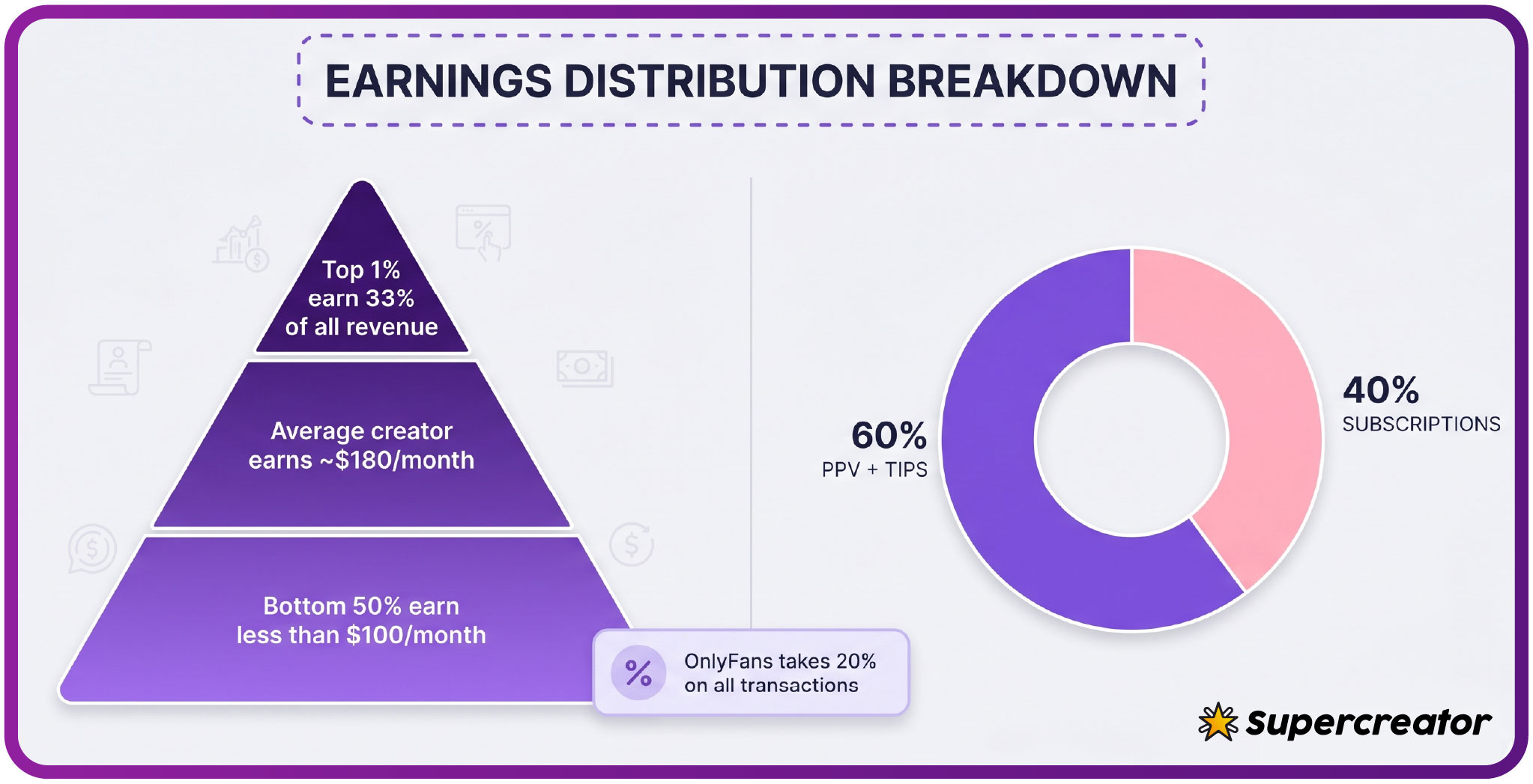
Paid subscriptions run from $4.99 at the minimum up to $49.99, with most clustering between $5 and $10 and a typical band of $4.99 to $15. Promotional first months can sit below the minimum, such as a $3 introductory month, while base prices cannot. A small temporary charge, typically ten cents, appears on statements during card verification and is refunded within days. The platform takes 20% and the creator keeps 80%.
PPV messages unlock up to $50, paid chat commonly runs $3 to $5 per message, and tips can reach $100. Free pages set price to $0 and earn via pay-per-view messages and tips, offering a lower-visibility alternative for users who want fewer recurring charges on shared statements.

Cross-Platform Sync Risks and Mitigation
Password manager autofill spans profiles and surfaces suggestion lists on login forms. DNS query logging at the router level records domain lookups regardless of browser profile. Search suggestion personalization surfaces related terms in a shared search bar. It will copy history, saved passwords, and form data into a profile anyone can open.
- Turn off history sync for the profile in question.
- Exclude the site from password manager matching rules.
- Disable cross-device clipboard, and check whether your router keeps query logs.
- Switch to a per-profile search engine setting to suppress personalization overlap.
Readers comparing subscription options often rely on best onlyfans no ppv reddit, where ranking methodology and pricing models are documented in one place.
Cloud Clipboard Leaks
One more sync vector is worth flagging: a cloud clipboard or password manager shared across a household account can carry partial URLs and form data even after you leave a page.
Incident Response When Exposure Occurs
Assume exposure will happen at some point, usually through a notification rather than a deliberate look.
- Revoke all active sessions from the account security settings, which invalidates tokens on every device at once.
- Force a password reset and confirm that the reset logs out all devices rather than only the current one.
- Review recent login locations and times to establish what was accessed and from where.
- Assess whether attached payment methods need a temporary hold or removal while you re-secure access.
After containment, work out which channel leaked. A lock screen banner points to notification settings; a visible tab points to missing profile separation; a statement alert points to payment routing.
Price Changes vs Security Events
When a creator raises the price, auto-renew stops and existing access lasts until the paid period ends. That detail matters during incident review, because a lapsed renewal can look like a security event when the cause was simply a pricing change.
External Discovery Browsing
OnlyFans has no built-in discovery feed or directory, which is why ranking sites exist. If your browsing of those pages happens on a shared profile, treat it with the same compartmentalization rules as the account itself.

Family Sharing and App Store Considerations
Family Sharing on iOS and Family Library on Google Play both create visibility paths that have nothing to do with the browser.
iOS and Android Pathways
- On iOS, subscriptions purchased through the App Store appear in the family organiser’s purchase history unless purchase sharing is disabled.
- In-app purchases made on the web are outside that system, which is one reason web billing is often the quieter route on a shared family plan.
- Google Play Family Library shares apps and some purchases but does not typically expose in-app transaction detail to other members.
- Installed app lists are visible, so an app on a shared device is itself a signal regardless of billing route.
- BestOnlyFans publishes its methodology alongside each list update, and reviewing your own setup on the same cadence makes sense.
FAQ
Does OnlyFans notify other devices when I log in from a new location?
The platform may send a security email about a login from an unfamiliar location or device, but it does not push a notification to other signed-in devices. The practical implication is that a shared inbox is the exposure point, not a shared device notification.
Can I use the same email for multiple OnlyFans accounts on one device?
Each account needs its own verified email address, so one inbox cannot serve several accounts simultaneously. You can still read multiple addresses from one mail client, but keep folder rules and notification settings separate per address.
What happens to my session if someone else opens the browser?
If the session lives in a shared profile, opening the browser can restore your tabs and leave you signed in. If it lives in a separate profile or container, another user opening their own profile sees none of it. Check which profile is set as the default startup profile.
How do I prevent payment confirmations from appearing on shared screens?
Review the notification settings of every payment method attached to the account. Disable preview content on the lock screen, and mute the banking app’s transaction banners. For lower transaction frequency, consider a free page at $0 with PPV unlocks rather than a recurring subscription.